Showing posts with label monster stats. Show all posts

Tuesday, December 20, 2016

Necromancers are pansies


Necromancer

Requirements: WIS 12 or below
Prime Requisite: CON
Hit Dice: 1d4
Maximum Level: 9
Alignment: Chaotic

Necromancers are reviled the world over, with the exception of the Qynarate, where they fulfill the role of both priests and slaves, forced by the Undying Empress to channel their grotesque craft toward the unholy task of keeping the state running. For all but the highest, it's perhaps a worse existence than everywhere else, where you'll just be hunted down by the locals and lynched or by the Church and burnt.

Further, necromancers are limited by their focus on thanatologies. They haven't the breadth of magic-users, and the day-to-day existence of a necromancer is often unpleasant - grave robbing and corpses, rotting flesh, and malevolent, life-hating intelligences.

So why do people turn to necromancy? Simple: it's easy, and it's fast. Necromancers gain power amazingly quickly, and all you have to sacrifice is your humanity.

Necromancers are restricted in arms and armor as magic-users. They also gain and cast spells like magic-users, but are restricted to the necromancer spell list.

In addition to their spellbooks, at 2nd level necromancers must make a pact with some malevolent intelligence. Non-exhaustive examples include a powerful undead, a demon, or another necromancer. As part of this pact, a necromancer learns 1 new spell whenever he gains a new level, but must complete some task for his patron (and may be required to do so between levels as well, if he wishes to keep the patronage).

Further, a necromancer may cast bonus spells per day. In order to do so, a necromancer must sacrifice a living, sentient creature. A necromancer gains bonus spellss equal in level to the number of hit-dice of the sacrificed creature(s), distributed as he chooses. A necromancer may never have more than one bonus spell of any given level. Bonus spells are kept until cast. (Example: the necromancer catches and sacrifices a 5th-level fighter. He may now memorize an extra fifth-level spell, a fourth and a first level spell, a third and a second level spell, or so on.)

Reaching 9th level: Upon reaching 9th level, a necromancer may create a stronghold, often a tower. He will attract a number (1d6) of intelligent undead (wights, wraiths, ghouls, but never mummies or vampires) and 1-3 necromancer apprentices of 1st level.
(Further, it will be difficult to attract peasants for tax revenue. 1/4th is a good starting point.)


Level

Experience Hit Dice (d4) Number of Spells (by level)
1 2 3 4 5
1 0 1 1 – – – –
2 1,251 2 2 – – – –
3 2,501 3 3 1 – – –
4 5,001 4 3 2 – – –
5 10,001 5 4 2 1 – –
6 20,001 6 4 2 2 – –
7 40,001 7 4 3 2 1 –
8 80,001 8 4 3 3 2 –
9 160,001 9 4 3 3 2 1


Spells

Non-exhaustive list

Level 1

Charm Undead
As MU spell, but only works on intelligent undead (ghouls, wights, etc.)

Detect Evil
As MU spell

Protection from Evil
As MU spell

Foul Grave
Duration: Permanent
By means of this spell the necromancer desecrates a grave-site. A body interred in such a grave is practically guaranteed to rise again as an appropriate form of undead, probably a wight or a wraith.

Corpse Essence
Duration: Permanent
Range: Touch
The caster draws forth the lingering vitality of a fresh corpse and infuses it into himself, gaining 1d4hp per HD of the dead creature. The corpse crumbles to dust in the process. It must be fresh, having died no more than a week ago.

Preserve Body
Duration: One Week
The necromancer temporarily halts the decay of a corpse, fending off all natural sources of rot and dissolution. Magical rot and trauma (such as from attacks) will still harm the body, but it will not suffer from bacteria, vermin, etc. This spell only halts decay; it does not reverse it. This spell may be cast on the animated dead.

Cloak of Death
Duration: 3 turns
Range: 30'
The subject of this spell is perceived by undead to be 'one of them' or otherwise not a threat or target. Intelligent undead get a saving throw to resist the effect. If the subject attacks or otherwise harms the undead, the spell ends.

Level 2

Raise Ghoul
Duration: Permanent
This spell allows the caster to raise a new ghoul from the dead. It requires a fresh body no more than a month dead (or well-preserved) to work with. The ghoul thus raised is the slave of the caster and must follow verbal commands, but he doesn't have to like it.

Aspect of Death
Duration: 1 turn
Range: Personal
The caster's visage becomes supernaturally gruesome and chilling, striking terror into all who behold him and fail a saving throw vs. spells

Animate Dead
As the Cleric spell of the same name, but the necromancer can raise twice his level in HD of skeletons and zombies.

Drain Level
Duration: Permanent
Range: Touch
After casting this spell, the necromancer must make a melee attack at +4 to hit. If he hits, the necromancer drains one level from the target.

Level 3

Ward Against Turning
Duration: 6 turns
Range: 60'
The necromancer whispers his will to the undead, letting them add half his level to their effective hit dice to avoid turning attempts. A necromancer may ward up to his own level in hit dice of undead with this spell.

Rip Out Spirit
Duration: Concenration
Range: 20'
This gruesome spell allows the caster to violently separate the spirit from the flesh of the target. If the subject fails a save vs. death, he loses 1 level (or hit die) per round until he dies or the caster ceases to draw forth his spirit. The caster must concentrate and do nothing else for the duration of the spell.

A spirit drawn forth in this way may be stored as per Soul Jar, though it does not get the ability to possess other vessels. Intelligent creatures only. Elves are immune.

Inflict Rot
Duration: Permanent
Range: 60'
If the subject fails his saving throw vs spells, he is imbued with a supernatural rotting disease. He loses 1d6 CON and CHA and is unable to heal naturally or magically from any inflicted wounds. A cure disease followed by remove curse can end the effects.

Raise Wight
Duration: Permanent
The caster raises a new wight from an available body. The body must be freshly slain (no more than 1 week old) or well-preserved. The wight thus raised is slave to the caster and must follow verbal commands.

Raise Wraith
Duration: Permanent
The caster raises a new wraith from an available body. The body must have been slain over a year ago and buried with grave goods of no less than 50gp worth. The wraith thus raised is slave to the caster and must follow verbal commands.

Summon Shade
By means of this spell the caster summons forth a shade from the dead. He may then ask it three questions before it returns to whence it came. The caster must have some strong link to the shade - a part of the body, a dear object, or being in a specially important location - and any given shade may only be summoned once. The shade will only know things that it would have known in life. In order to cast this spell, the caster must sacrifice at least 1hp worth of fresh blood (though it need not be his own).

Level 4

Eldritch Life
Duration: Permanent
This spell breathes life of a sort into the dead. To cast this spell, the necromancer must spend 2d4 weeks preparing the body for its 'resurrection'. When first chosen, the body must be fresh, slain no more than 1 week ago, or very well-preserved (think formaldehyde, not mummification). This spell only works on humans and demi-humans (elves included).

When raised, the new 'person' will have no memories of his former life, and must be taught everything - how to speak, how to read, how to eat, etc. (Neither will he have any class levels from his former life.) There is a 5% chance that the raised creature will be subtly insane, gradually becoming homocidal and monomaniac.

Revitalization in this fashion will give the new 'person' unnatural strength and vigor, imbuing him with 2 (d8) HD, max CON, and max STR. If not insane, the creature will be strongly attached to the caster, as though Charmed (but permanent, and unable to be dispelled), unless and until the caster tries to kill or seriously harm him.

Any given caster may only have one such raised companion at a time, for if he raises another inevitably they will go to great lengths to kill one another.

Raise Mummy
Duration: Permanent
The caster raises a new mummy from an available body. The body must be properly mummified, which takes at least a week and 500gp of materials unless you happen to have a mummified body sitting around. The mummy thus raised is slave to the caster and must follow verbal commands.

Raise Spectre
Duration: Permanent
The caster raises a new spectre from an available body. The body must have been slain over a year ago and buried with grave goods of no less than 200gp worth. The spectre thus raised is slave to the caster and must follow verbal commands
Skull Spirit
Duration: Permanent
The caster raises a new skull spirit from an available skull of an intelligent creature. The skull must be clean of all flesh and not seriously damaged. The skull spirit follows the verbal commands of the caster. (Stats for skull spirits can be found at the end.)


Level 5

Soul Leech
Duration: Special, see below
By means of this spell, the caster consumes a stored spirit. Consuming a spirit may give many benefits. Choose one:
  •  Remove curse as per the spell
  • Cure disease as per the spell
  • Gain 1 bonus spell of each level you are able to cast. You may not do this more than once per day
  • Cure critical wounds as per the spell (3d6+3)
  • Restoration as per the spell
  • See invisible, See ethereal and detect magic as per the spells
  • Set any one stat to max (18) for 1 day
Haruspicy
This spell functions like the clerical spell Commune, except that the caster must kill and read the entrails of some creature as part of the spell. Further, use of unintelligent creatures only grants 1 question.

Death Spell
As per the MU spell

Lich
Duration: Permanent
This spell infuses the caster with necromantic energies that prolong life into undeath. It must be cast three times exactly a year and a day apart from one another. If the caster misses a subsequent casting, he dies and his body turns to dust with no chance of resurrection. Further, each casting requires reagants costing at least 5,000gp and a week's careful, uninterrupted preparation.

If successful, there is at first no outward change to the caster. However, when he dies either from old age or any other source, he will not die. Instead, he will continue on as a lich. (Exactly how to handle this is up to the DM.)

Tuesday, October 25, 2016

Skelastodons

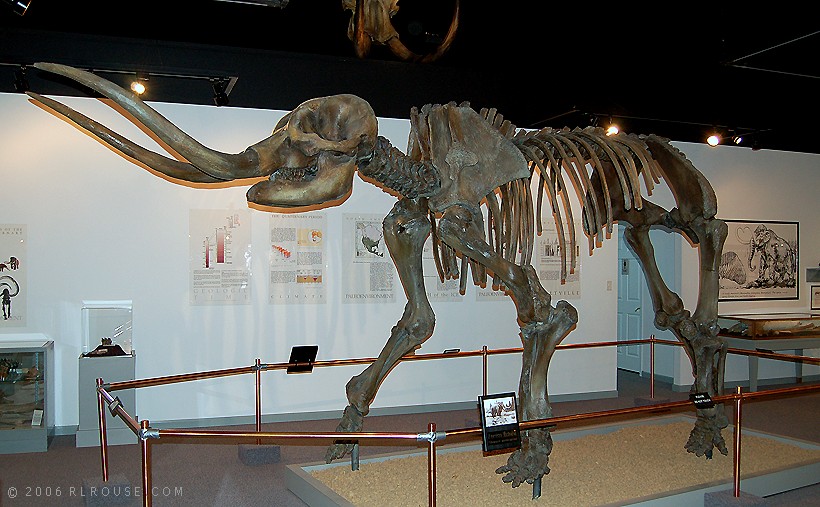
A Skelastodon perusing a natural philosophy collection
Hot on the heels of +Chris Kutalik 's seminal paper in the Hill Cantons periodical opening the field of necromammutology, adventurers and chroniclers here at Renovating the Temple have braved the wilds (and the peer review process), tracked down another specimen and risked life and limb to bring this account back for the glory and furtherance of Thanatotaxonomy. Behold:

 The Skelastodon

No. Enc.: 1-6
Alignment: Chaotic
Movement: 15
Armor Class: 5
Hit Dice: 7
Attacks: 2 tusks, 1 front trample
Damage: 2d6 (tusk), 1d10 (trample)
Save: 9
Special: Immune to piercing weapons
Morale: 12
CL/XP:8/800
 
Due to the mass of such creatures and the cold of the Desolate North, where they roam, it takes a long, long time for a Zombastodon's flesh to rot. Many never make it to that point, succumbing either to environmental hazards (like bands of hexcrawling adventurers) or to the unraveling of their animating necromantic energies.

Those that endure become specimens of Mammut Ossifer, though we couldn't keep the coolies and other such hangers-on in the expedition from settling on the vulgar and unenlightened term 'Skelastadons'.

Opinion is divided as to the mechanism, but over the long, long time that it takes for Morbidium to mature into Ossifer, these creatures gain a surprising intelligence and the capacity for speech. While still malevolent and driven by a hatred of the living, their intellects are invariably also keen on metaphysical or scientific pursuits, such that on a roll of 7 or greater on 2d6 they will attempt to engage any sentient newcomer in argument. Indeed, it is invariable that whenever more than one is encountered the herd will be discussing some subtle point of philosophy in their nasally, trumpeting tones.

One report by Professor Emeritus Algernon Finneaus Merici is worth mentioning. The good Professor was leading a secondary foray from base camp to investigate sightings of an old ruin in the Smoking Valley when they were ambushed at night by a pair of Skelastodons who proceeded to engage the Professor in disputations on the nature of the transubstantiation of souls while slaughtering every other member of the expedition. Eventually, after the initial massacre and hours of scholastic exchange, the pair allowed the Professor to leave unharmed.

Rumours persist among the natives of Skelastodons capable of casting spells, but no example has ever been witnessed.

Friday, December 4, 2015

Other notable fauna in the Forest of Fog

I started off the last post with just an idea of "Desert hyacinth monster" and it grew from there. Aaaand then I kind of went overboard with the monster description; nobody needs umpteen paragraphs on a single gimmick plant. So here's some more information on the Forest of Fog for anyone who's interested.

Denizens of the Forest of Fog

The first thing to remember is that there are no animals. Most everything that tries to kill you is going to be a plant, because the plants eat everything else.

There are the hyacinths of course. But there are some others. These are just samples; the Mad Elven King was really, really into horticulture.

Shattergrass
More of a trap than a monster, shattergrass is a delicate, transparent green grass that almost looks to be made from spun glass. From a distance, it looks normal. It grows in patches, usually in gaps in the trees (which it sometimes causes). In the dim light of the forest, it can be hard to tell from regular grass - not that there's much of either.

When disturbed by anything stronger than a gentle wind, shattergrass breaks into thousands of razor-sharp shards, like really thin slivers of broken glass. Basically, moving through a patch of shattergrass is going to cost you 1d6 hp and possibly shred your footgear or leggings.

Weeping bromeliads
Like their more mundane cousins, these live on the branches of trees. Unlike their more mundane cousins, they hijack trees.

Trees with a large number of weeping bromeliads on them will have trunks and branches stained a deep red from the juices of the flowering plant. They will also move whenever anything larger than a cat walks by, because the bromeliads are territorial and don't like invaders.

Stats as a treant, only most of the trees are sessile, and have 1d10 + 3 bromeliads all over the branches. Trees with ten or more bromeliads may even uproot themselves temporarily to chase off the party.
(7HD version, treants go up to 12): HD 7; AC 2[17]; Atk 2 strikes (2d6); Move -- or 3; Save 9; ML 12; CL/XP 7/600


Hangman's moss
Here's another trap-monster. This looks a lot like like Spanish moss, except maybe even longer. It likes to form long curtains, hanging in the air and waving listlessly on any light breeze. Close inspection will show a small assortment of insects, birds, and an occasional bat caught in the curtain and dessicated.

Anyone touching a sufficient amount of the moss (a couple clumps is fine, but a curtain is dangerous) must save vs. poison or be paralyzed. (Elves are not immune.) Anyone so caught will be slowly dessicated, losing 1hp/round as the moss sucks out their bodily fluids. Losing 6 or more hit points in this fashion at a time may cost the character either 1 CON or 1 CHA at the discretion of the GM.

Suggestive forsythia
(The name sucks. Sorry. Feel free to suggest a better one; I'll probably adopt it.) These bushes were magically bred from their mundane cousins in an attempt by the Mad King to create "someone who finally understands me!" They are telepathic.

Many are just lonely and looking for someone to talk to. However, all are subtly (or not so subtly) mad - whether from the original process or the long isolation or just their alien natures, its hard to say. 

Only 1 in 6 elves can actually hold something like a conversation with them; everyone else just gets creepy crawly feelings in the back of the skull and an occasional burst of suggestive emotion - save vs charm or be given a two-word suggestion. (Anything obviously life-threatening or morally contrary requires no save.) The forsythia are also accomplished chromatophores, changing the colors of their flowers in various different patterns. This allows a few of them to cast spells via complicated, rapid color shifts. They favor charm effects and other emotion/perception altering spells.

Suggestive forsythia: HD 2; AC 7 (9 vs fire); Atk None; Move --; Save 17; ML 8; CL/XP 2/30
Can cast 1 2nd level and 2 1st level spells per day. Example spell list: Charm Person - Faerie Fire - Phantasmal Force

Warpwood
It's hard to say what these trees look like, because anyone wandering within 50ft of them falls prey to an hallucinatory effect that subtly changes the terrain, cloaking certain objects and giving the illusion of progress when in fact they are walking in circles. Once this is noticed ("Hey, I think we passed that tree a couple times before!") the illusion is broken - in game terms, give a secret save every fifteen minutes or so. The thing that makes these nasty is that other, more dangerous plants will often live nearby and be altered by the effect so as not to be noticed until too late. (If this happens, the effect is broken immediately - it doesn't stand up to direct contradiction.

Travellers who are aware of the danger and alert get a save against the effect when they first wander in. Roll once for the leader of a party.

The bark of the warpwood tree contains a powerful hallucinogen that when properly prepared and boiled into a tea gives visions. These are usually relaxing and pleasant, but can occasionally evoke powerful emotions - fear, loathing, lust, despair. There may even be a way for a shaman to use it for a vision-quest of sorts (like use of the Commune spell, with no level requirements, but only 1 question). Overuse, especially of potent concoctions, can lead to all kinds of nasty effects best left to the DM.

One 'dose' - a given tree will have enough easily reachable bark for 50 or so, if you want to carry a bunch of bark around - is probably worth 5gp to the right buyer.

That's great, but how do I use this?

Good question. Once the players figure out the gimmick of the place, the solution is simple: stay away from the plants. They mostly can't come after you.

The solution to this is to put them near/around something the players wan to investigate and so much brave the dangers of the plants to do so, or to place them in such a way that the players don't know until it's too late that they're wandering into danger. (Warpwood is an example way to do this latter one, but if you use 'it's a mind-screwy tree!' too often, your players will probably get angry.)

Concrete examples, as well as notable areas of the Forest of Fog and random encounters should be forthcoming shortly, like in the next post.

Wednesday, December 2, 2015

The Hyacinths of the Mad King Undumiel

Once upon a time, in what is now the Forest of Fog (so called by the natives, who shun it and force exiles into it), there flourished an elven city. To call it a city is something of a misnomer: elves rarely live in communities larger than 300. The Forest of Fog is the remnant of that city.

Elves prefer to carefully sculpt their chosen environments (usually forests, but sometimes mountain valleys, river plains, prarie, etc.) to provide the comforts of civilized living while still appearing to be 'in harmony with Nature' by elven standards. One of the things this means is that elven settlements tend to decay quickly once the Elves move on.

 The Forest of Fog is roughly three miles by three miles, circular in shape. It looms over the surroundings on a plateau 200 feet up. This is the traditional boundary among those tribes who use it for exile. The guilty party is force to climb up at spear-point (there are plenty of easy ways up and down from the plateau for even a mediocre climber, but you'd have to leave ponies behind). Sometimes the climber chooses the spears, for legend has it that no one ever returns from the Forest of Fog.

But foggy

It is called the Forest of Fog because it is continually covered in a cloudbank

The first thing you will notice upon entering the Forest of Fog is that it is warmer than the surrounding land. It never snows here; the fog's warmth melts all snow before it hits the ground. The second thing you will notice upon entering the Forest of Fog is that there is no animal life. No birds. No squirrels. You can look, but you won't find any deer, or wolves, or anything like that. Even bugs keep a low profile and are hard to find. The reason for this is the hyacinths.

A fictional example, placed in a desert to confuse onlookers. Note the lack of leaves.
 If you travel into the forest instead of staying near the cliff edge, you will eventually see the reason for the fog and the lack of animals: a hyacinth, sticking out of the bark of one of the trees. If it's large enough, it will try to kill you.

 Hyacinths in the Forest of Fog

The hyacinths in the forest of Fog were created by the mad sorcerer-elfking Undumiel in the search for the perfect plant. During the cataclysm that ended elven civilization here, the nursery was broken open, and they have since spread through the forest.

These plants are shaped like multiple small flowers in various states of opening, ranging from the size of a human hand up to the size of a fir tree. They attach themselves to trees, rotting logs, the ground - any stable non-rocky surface will do.

When a non-elf first sees a hyacinth roughly the size of a dog or larger (smaller hyacinths are not yet mature), he must make a save vs charm or approach the plant. This effect is completely mundane; the hyacinth is the most beautiful thing you've ever seen. Beautiful enough to make an angel cry. Beautiful enough to take your breath away. You simply must stop and admire it. Those who have seen the hyacinth try to eat someone, made the save, or seen truly sublime beauty before (e.g. glimpsed Aphrodite in her bower) are immune. It's still beautiful beyond description, but you don't have to approach.

Elves are immune because they're jaded assholes who have seen it all before and it's, "just a flower, nothing to compare to what my grandmother grows in her window box at home." (But with more pretentious language.)

Each hyacinth has a profusion of flowers. These are its digestive organs. The ones at the top are usually closed because bugs are stupid and easy to catch. The ones at the bottom are often open. If a flower is open, and you're the right size, it will attack when you get within range - usually about 20ft for a human.

A tendril will emerge from the flower and seek to rapidly twine around you. The tendril bears a contact euphoric - save vs. poison each round if it hits or be paralyzed in ecstasy. The plant will then attempt to drag you toward the flower that houses the tendril and engulf you at a rate of 5ft/round. A tendril has STR 12 and 3 hit points, but can be hurt only by cutting weapons. Incidentally, this also makes the plant immune to arrow or sling fire - tendrils from the smaller flowers dart out and catch the projectiles to ingest them, only to spit them out a few moments later.

Elves are immune, because they've felt it all before and aren't that impressed.

Once engulfed in a flower, you take 1d6/round until dead, and will dissolve over several days. By accounts of survivors (or the ghosts of former victims) it feels like being in the womb. You don't even notice as your flesh sloughs away; all your cares and concerns are dissolved with it.

They look so happy right before they die
A combined STR of 30 is required to pry someone out of a bud in 3 rounds. A combined score of 40 will drop that to 2 rounds; a combined score of 50 will drop that to 1 round.

A hyacinth uses water pressure gradients to move, and each one has a small mass of water bladders buried shallowly into whatever surface they are attached to. Since pressure gradients are required, when moving the plant lets off a constant trickle of escaping water vapor, which is the cause of the fog. This means that a hyacinth will generally only be able to move for 1d12+7 rounds before it depletes its water supply and goes still.

Once the plant has digested its victim, it will eject any inedible bits (over-large bones, metals, woods or cloth of plant material), meaning that plants old enough to digest people will probably have a small cache of treasure scattered on the nearby ground.

The pollen of the hyacinth is a strong euphoric. It loses a little of its potency when taken out of the flower, but kept in an air-tight bottle can be shelved almost indefinitely. It could probably sell for around 25gp/oz to the right buyer; a plant will have a number of ounces of pollen equal to its hit dice. One ounce contains 20 doses. (Pollen is light.)

Hyacinth of the Forest of Fog

This is an example plant capable of engulfing a human. At any time it will have 1d6 open blossoms of the appropriate size.

HD 4 AC 8 ATK no damage, save v. poison or be paralyzed MV -- Save 14 ML 12 CL/XP 5/240 Special Engulf for 1d6/round; also, immune to sleep, charm, etc because it's a plant.

Edited to add: made things a little clearer above; specifically, the plant can't simply be shot from a distance with non-magical projectiles, and it requires a to-hit roll to touch a victim. The tendril never misses, but it can't poison a leather breastplate.

You can't have a post about carnivorous plants without Audrey.

Friday, February 15, 2013

Levels in the temple

One of the advised conceits in D&D is the correspondence of dungeon level with character level. If you're level one, you should stay on level one of the dungeon. If you're level two, venture down to level two, and so on.

This is violated quite a bit, especially later on, but it's still at least implicit in 1st edition. Needless to say it doesn't work in GURPS, since GURPS doesn't have levels.

It can be broadened out to say, "Further down means more dangerous," and fortunately this is the way the Temple operates; they expect you to be around level six or seven by the time you hit Temple level three. So how am I going to salvage this in GURPS? I don't quite know.

I've spoken before (as have many others) about the difference in the power curve between GURPS and D&D. In fact, it's more accurate to describe them completely separately. Nevertheless, I want to preserve the feel of the temple, transitioning down to tougher monsters as the party grows stronger, and having the party grow stronger, rather than presenting a roughly homogenous difficulty that only slowly grows.

The first part of this is figuring out the rate of advancement. For my game, I want the PCs to hit 250 points, the base point value for the DF templates, by the time they finish level 2 of the Temple. This strikes me as fairly fast advancement (though it remains to be seen if I'm mistaken about that), since the PCs are starting at 150 points. Nevertheless, I can tie point rewards to geographical features. For example, once the PCs discover the secret room on Level 1 (disclaimer: I'm not looking at the map at the moment; I don't know if one such exists) they get ten points. If they recover the treasure horde in room 136, it so happens that's enough to earn them 5 points when they go back to town, for paying off their debts. You get the idea. Extra rewards (for roleplay, awesomeness, or whatever) will be above and beyond, so that it's possible to advance faster if they play well, or slower if they play poorly. (One could argue that I should place more points, because the assumption is that the PCs won't find every treasure, but looking at

Every twenty-five points is a 'level', for purposes of building new characters. If your character dies, your new character gets his last point value that evenly divided by 25. (So, if your character had 186 points, your new one gets 175. Don't die.)

So much for characters. Unfortunately I doubt I'll be able to give too much in specifics on this blog, but one of the stats to write down for treasure hoards, secret rooms, and other desirable areas is character point value.

For monsters, the process is a little more difficult. I want to maintain roughly the same constitution in the temple; if AD&D players are fighting githyanki in the temple, GURPS Dungeon Fantasy players should also be fighting githyanki. However, numbers obviously need to change; HP does not an interesting encounter make. However, I discussed this in more detail in a recent post.

Still, I'm hoping that skill level may make a difference. I understand that 14 is the minimum level to challenge 250 point DF characters. Maybe 12 will work with less skilled PCs. Still. I understand there's a fairly hard lower level of skill that matters. Hmm.

Unfortunately, it looks like what I'll need to do is put together a skeleton crew ("This room has at least one ogre; this room has at least a roper and three trolls.") based around what the module says, then tweak it in play to actually fit. Unfortunately I don't have the experience to do otherwise. This is distasteful to me, but there it is. I suppose it's all right so long as I haven't given any hints of a contrary nature about what's to come if I bump the bugbear count from two to fourteen before the PCs hit the room.

I can at least map out relative difficulty levels in the module from room to room and use those to guide my placement, if nothing else.

Tuesday, February 12, 2013

Trolls on acid

Just a very quick one here: Andersonian trolls (and therefore D&D trolls) are vulnerable to fire and acid. Setting aside fire for a moment, what if being vulnerable to acid meant instead that they go berserk and lose their regeneration powers when dosed with an hallucinogen? Or, for a straight-up silly game, they transform?


Wednesday, February 6, 2013

Dispel Magic Aura

One of the pieces of wisdom floating around about GURPS Dungeon Fantasy is that mages aren't responsible for the damage output like they are in D&D. Instead, that's the fighter-types. Sure, a Wizard might be able to kick off a 17d Stone Missile, but that's once, whereas the Knight is doing 3d+6 a turn.

Unfortunately, one of the pirmary ways to make a cool effect on a monster that is otherwise 'mundane' is to say that magic works weirdly on it, or it has strange immunities to magic.

This could have the unfortunate effect of further marginalizing mages as combatants. "Oh, great - not only do my spells do diddly-squat to the owlbear compared to an axe, but now I have to overcome Magic Resistance, too. Remind me why I volunteered to play the Wizard?" In fact, this can already be seen in some ways just with the standard monster tropes: the Body Control mage can't do much against a zombie or a golem, but the knight's sword works just fine. (Sure, the golem has DR 10. The knight doesn't care when his average damage is 16.5.)

One solution is just not to use those special properties, and it has its merits. If, instead of making your creature Immune to Mind Control you remove its vitals, it has a wider appeal. Unfortunately, this doesn't work well for monsters that are generally accepted to be humanoid. If your mind-flayer doesn't have a heart, fine. But if your orc doesn't have guts, it's a little weird, and if that holds true for not only orcs but goblins, gnolls, ogres, bugbears and giants, I'd cry foul.

So we're "stuck" with the idea that mundane monster special abilities need a magical basis, but not wanting to further marginalize mages who engage in combat. Where does that leave us?

To answer that question, I asked myself, "Where are wizards and their ilk useful in combat?" and the answer I got was twofold: they buff the damage dealers, and they remove obstacles to them dealing damage.

Enter the idea of a Dispel Magic aura as one answer. Think of it like a cross between an Affliction and a Mana Damper. (Technically, you could probably build it as an Affliction with Aura and Based on Different Attribute: Spell Level, with the effect of "Dispels temporary effects and suppresses permanent ones." Slap on an Area or Emanation enhancement if you want it to be activated by proximity instead of touch.)

The way I envision it is that anyone who touches or is touched by a creature with a dispel magic aura immediately loses all temporary spells placed on him, resisted by the highest (or lowest, or not at all, depending on how much of a pain it is) spell level he has on currently. That Knight was Great Hasted by the Wizard? Not anymore. Oh, also, whoops, but the Continual Light went out.

If the attacker doesn't have any temporary enchantments on, then hitting the creature with a magic weapon temporarily suppresses one level of enchantments on the weapon. (So, for example, if the weapon is a +3 Accuracy +4 Puissance Penetrating Weapon (2) Ghost Weapon Dancing Sword, after it hits it becomes a +2 Accuracy +3 Puissance weapon without any of that other stuff.) Conversely, if the creature hits an opponent, that opponent's armor (or other miscellaneous gear, GM's call) temporarily loses one level of enchanment.

In order to avoid this being a huge bummer, there are a few restrictions. First and foremost, loss of permanent enchantment is purely temporary. I'm leaning toward it being of 1 minute duration, as long enough to cover any but the longest fights, but short enough not to be a hassle out of combat timing. (Different hits stack effects but just reset the timer for easy book-keeping.) Secondly, this only affects spells on other people. Missile spells, area spells, and Regular spells cast on the creature itself act normally, meaning that magic users can still affect it.

Since I'm not trying to sell books, I'm not going to stat up this power according to the RAW. Instead, I'll just note it down like so:

Dispel Magic Aura: This aura suppresses magic. Anyone who touches or is touched by the creature with this power immediately loses all spells cast on himself or being concentrated on at the moment of contact, subject to the resistance of the highest spell level in effect. In addition, any strike on the creature suppresses on 'level' of enchantment on the striking object for one minute, with multiple strikes causing cumulative effect but not cumulative time. Any hit by the creature suppresses one 'level' of enchantment on the armor or miscellaneous gear of the person hit, in the same way.
I imagine gnolls in the world of the Temple will have this. After all, they're twisted magical amalgamations of hyena and man, created long ago by an evil archmage as shock-troops to use against his foes. 

Monday, February 4, 2013

Piles of hitpoints in the Temple

One of the things that happens in the Temple of Elemental Evil is that, in order to ramp up the difficulty as you go down levels, the monsters get nastier. Instead of orcs you fight gnolls, instead of gnolls you fight ogres, and so on. The number of opponents stays the same or thereabouts. I imagine this works fairly well in D&D, but in GURPS it's a disaster. One of the first things you learn/are told as a GURPS GM is that piles of hitpoints do not long encounters make. That ogre might be intimidating to a level 1 party, but to a bunch of 100-pt characters it's a pushover.

Instead of a hitpoint economy, GURPS has what I'll call a maneuver economy. (I use that term to distinguish it from the action economy of 3.x edition D&D). What I mean by this is that combat is won by the side most able to do effective things each turn. At the same time, the ability to do effective things is fairly well constricted (with the exception of certain advantages or spells like Great Haste), so for non-exotic opponents it translates pretty well into 'number of combatants on your team'. There are exceptions, of course, which is why I put the emphasis on the maneuvers rather than the allies.

This is the case because, generally speaking, GURPS characters can't 'soak' attacks as well as high-level or high-hit-dice D&D tokens. in D&D you can win a war of attrition by having more to start with. In GURPS, not only is it a lot harder to have more to start with, but your combat effectiveness is tied on a turn-by-turn and overall basis to your damage taken.

Okay, so I haven't said anything new. Anyone who has GMed or even just played GURPS for more than a month or two understands the above, at least on an intuitive level. So, how to translate the D&D difficulty scale over to GURPS, especially when dealing with 250 point characters?

There's the simple answer, which I might go with: hire more NPCs. Instead of having two orcs, have five. Later on, instead of having two gnolls, have eight. The problem with this approach is that combat difficulty in GURPS is very difficult to judge, and it's a very fine line between outcomes, at least when judged by the numbers. (A smart party whose incentives are divorced from combat may very well find a way to avoid those eight hyena-men.)

The more complicated answer is to make your combat NPCs exotic; that is, give them traits that allow them to even the action economy out against multiple foes. (I mean traits like Extra Attack and Altered Time Rate, or even Compartmentalized Mind). The problem with this approach is that the opponents in the Temple are known (to me), and one of my goals is to hew fairly closely to the original, while still making it interesting to play.

I think what I'm going to do is, first, in the lower levels of the temple especially, pad out the numbers with less-nasty monsters. This works fairly well inside the world, too; it's quite believable that a small troop of bugbears has a posse of goblins at its disposal. (Plus, doing this might allow me to sneak in some more interesting fodder-type monsters, like gibberlings and xvarts (not to mention norkers). I don't have a feel for exactly how to do this yet, and I imagine each encounter will involve decision about how much to pad (and how to change room descriptions to account for the extras).

In addition, I like the idea that our well-known humanoids should still have some surprises in store (much like Peter D's hobgoblins, for which I sadly cannot find a more specific link). Therefore, I might decide all my githyanki are mana-dependent, or that kobolds are, due to their strange physiology (being the degenerate spawn of Elder Things) resistant to cutting damage, for two fictional examples.

Hopefully soon I can share more specifics. We game again tomorrow night, where we will hopefully finish up the currently running campaign, leaving the next-but-one Tuesday for the players to explore my version of Hommlet.

Thursday, December 20, 2012

Ghouls

Spoiler alert: there are ghouls in the Moathouse and the Temple. With that in mind, I naturally need GURPS stats for them.

This was going to be a rather straightforward affair: chance for paralysis and ghoul fever, eschewing the three attacks per turn as something reserved for more powerful and scary monsters (like trolls). After all, my experience with ghouls stems from 3.5 D&D and Pathfinder, where they're just not that scary unless they have a huge number advantage. Sure, that paralysis is theoretically scary, but it's an easy save and hardly matters anyway, right?

Then I cam across this post over at Delta's D&D Hotspot.

I was especially intrigued by the possible aversion to sunlight, since that's outside my experience, brings them closer back to their Tolkienian roots, and gives an interesting twist I don't think my players will expect, but can exploit once discovered. It also led to me beefing them up a little further, to bring them in line with what I think was the original intent in the module.

ST: 12 HP: 12 Speed: 5.25
DX: 10 Will: 10 (+2 vs True Faith) Move: 6
IQ: 6 Per: 12
HT: 11 FP: 11 SM: 0
Dodge: 9 Parry: 10 (unarmed) DR: 1

Bite (15): 2d cut, save vs. ghoul fever at HT-2
Claw (15): 1d(5) fat, resist at HT-1 or be paralyzed for 1d seconds. Once paralysis ends, roll as for Mental Stun to recover. Treat this as a Contact Agent affliction.

Ghoul Fever: 1d-2 fat daily (infinite cycles), roll HT-3 to stop cycles. Once at 1/3rd FP, the infected is constantly cold (think Frodo stuck with the Morgul-blade)

Skills: Brawling - 14, Tracking - 12, Stealth - 14

Traits: Appearance (Hideous), Bad Smell, Doesn't Breathe, Doesn't Sleep, Extra Attack 2, Fragile (Unnatural), High Pain Threshold, Immunity to Mind Control, Immunity to Metabolic Hazards, Injury Tolerance (No Blood, Unliving), Infectious Attack (Must kill victim), Uncontrollable Appetite (6), Unfazeable, Vunlerability (Sunlight x2).


Class: Undead

Notes: Truly Evil. Will not negotiate. Attack without fear, except in the presence of very strong light (daylight or stronger, including Continual Light at 6 cost and like spells. Will attempt to hide and ambush prey. Provokes Fright Check -3 in people who have not succeeded in a Fright Check vs. ghouls, ghasts, etc. before


They're glass cannons; they could easily kill off a party if they get the drop on the PCs, but a few good hits will put one down for good. Their Fright Check and tendency toward ambush amplify the chances of them being nasty, but smart players will recognize the signs of a ghoul infestation and be on the alert. Also, I feel like this does a good job of potentially returning the 'scary' to these creatures, which otherwise suffer from Cleric syndrome.

The Vulnerability is not a mistake; a weakness would make them too much like vampires. This way, they take double damage from light sources that cause damage (such as a Sunbolt spell, or a laser), and they can be played as sensitive to strong light sources, but they aren't in the same difficulty more powerful undead are.

Wednesday, December 19, 2012

Maintaining Encounter Balance

Let me start off by making clear what I'm not talking about.

I'm not talking about scaling 'encounters' to the PCs' capabilities in anything other than a rough and ready fashion. I'm certainly not talking about some analog to CRs or other balancing mechanic designed to maintain an even level of pressure on the characters. I think that's a false idol, both unattainable and undesirable besides.

No, I mean something much simpler: D&D and GURPS consider different things to be difficult, and they favor different sorts of tactics.

D&D at its core involves tactics of resource management and attrition. Roughly speaking, the slope of the increase in hit points for a party is about twice that of the slope of damage output increase for a party. (I'm eyeballing it here; the main point is that it's proportional with some multiplier n.) In GURPS, if anything, it's the opposite; what with points for Targeted Attacks and Weapon Mastery and Heroic Archery and more damaging spells and whatnot, damage increases as about twice HP.

This is reflected in the different challenges in the two games. In D&D, in order to have a monster fight that challenges higher-level characters, you throw bigger monsters with stronger attacks at them - you're still presenting a serious threat to their resources without necessarily killing them outright, and you're pretty well guaranteed to have your monsters stick around long enough to be interesting, since they're bringing enough HP to the fight that the PCs can't get rid of it fast enough to be trivial. Conversely, in GURPS if you try this tactic, you're going to end up with a very quick fight - either the PCs will walk all over your big nasty, or you'll accidentally squish the party.

Instead, in GURPS, the general tactical layout involves multiples of smaller monsters, because smaller monsters can still pose a serious threat, and dividing up the foes divides player actions. In other words, D&D is about managing hit points, whereas GURPS is about managing actions. The side with more actions is the side with the advantage.

This is borne out by the common advice for encounter balancing in GURPS. It's often said that, if pitting the PCs against a singular large monster, you should do one or more of:
  • Give the monster Extra Attacks, always-on effects, or suchlike, thus bringing number of available actions back toward parity
  • Give the monster special defenses, such as insubstantiality or injury tolerance, thus making each opposing action less effective
  • Include environmental effects, thereby requiring that PCs spend their actions on things other than killing the monster
  • Provide tactical advantage to the monster, which reduces PC actions either entirely (e.g. surprise) or in their effectiveness (e.g. an archery battle against an enemy up-hill - which means that PCs either shoot back at minuses or spend actions closing the distance).
In my admittedly inexperienced opinion, the first option is the least effective for lengthening a fight, though it works just fine for maintaining a controllable danger level in the fight.

This is something of a problem for the Temple of Elemental Evil, which naturally assumes a D&D approach to combat tactics. For example, there are places in the modules where a single ogre (or an ogre and a wolf, later on) is put forward not only as a foe, but as very stiff opposition that the party will probably flee from. In GURPS, on the other hand, a party of 50-75pt characters can probably take out a single ogre without much difficulty - maybe one death, if the ogre gets in a lucky hit. So how to convert these?

It turns out the answer is, "only partially", at least for my purposes.

The pivot point between GURPS and D&D works both ways. There are encounters that are supposed to be very tough in D&D that the GURPS characters will walk right over. However, there are also encounters that Gygax reckons will be fairly easy for a group of 4th-5th level D&D characters that will present serious problems for GURPS characters even at 300 pts. (I'm looking at you, group of 25 bandits.) There are enough of these that I think it balances neatly enough, even if sometimes it looks like they're in the wrong places.

The other part is taking a hard look at the large monsters that the Temple favors for challenging PCs and seeing if there isn't some way to preserve some of that element. To that end, let's take ogres are our example du jour:

Ogres in D&D are fairly nasty, especially toward lower-level characters. To help preserve that, in my game, all ogres will have Magic Resistance 5. This, combined with the extra casting cost to directly affect creatures of larger sizes, should put a damper on magical solutions that don't mimic weapons or environmental effects. Further, while they're stupid, they will have a canniness that enables them to use their advantages well. They will all get Tactics-12. Specifically, while they can't really hide (even if they could find a place not to be seen, you'd still be able to smell them), they naturally pick lairs that enable them to use their reach and their greater strength to advantage, doing things like picking places with attached hallways or stairs, and piling up obstacles that create difficult footing for creatures not as large. Finally, ogres in my game have extra DR 3 over vitals and the skull, in the form of thick subdermal ridges of bone, making them look burly even for their size and giving them low, sloping foreheads with weird, angular planing. Evolution has taken advantage of this, layering on extra muscle at these reinforced attachment points, which explains their high strength.

So, in my game, an ogre looks something like this:


ST: 25 HP: 25 Speed: 6.00
DX: 11 Will: 7 Move: 6
IQ: 7 Per: 7
HT: 13 FP: 13 SM: +1
Dodge: 9 Parry: 10 DR: 2, 5 on vitals and 7 skull


Punch (13): 2d+2 cr
Club (14): 5d+3 cr (treat as oversized maul, meaning it's 0U because of strength)
Traits: High Pain Threshold, Magic Resistance 5, Night Vision 7 DR 2 (Tough Skin), DR 3 (Limited: Skull, Vitals), Bad Temper, Bully
Skills: Brawling-13, Tactics-12, Two-Handed Axe-Mace-14
Class: Mundane
Notes: Some may have armor, mostly on the chest; adjust DR accordingly. (Most common is either naked or Heavy Leather.) Willing to negotiate, but only on their level (Food, women, territory, simplistic praise), easily tricked.